The 2025 Grazing Season
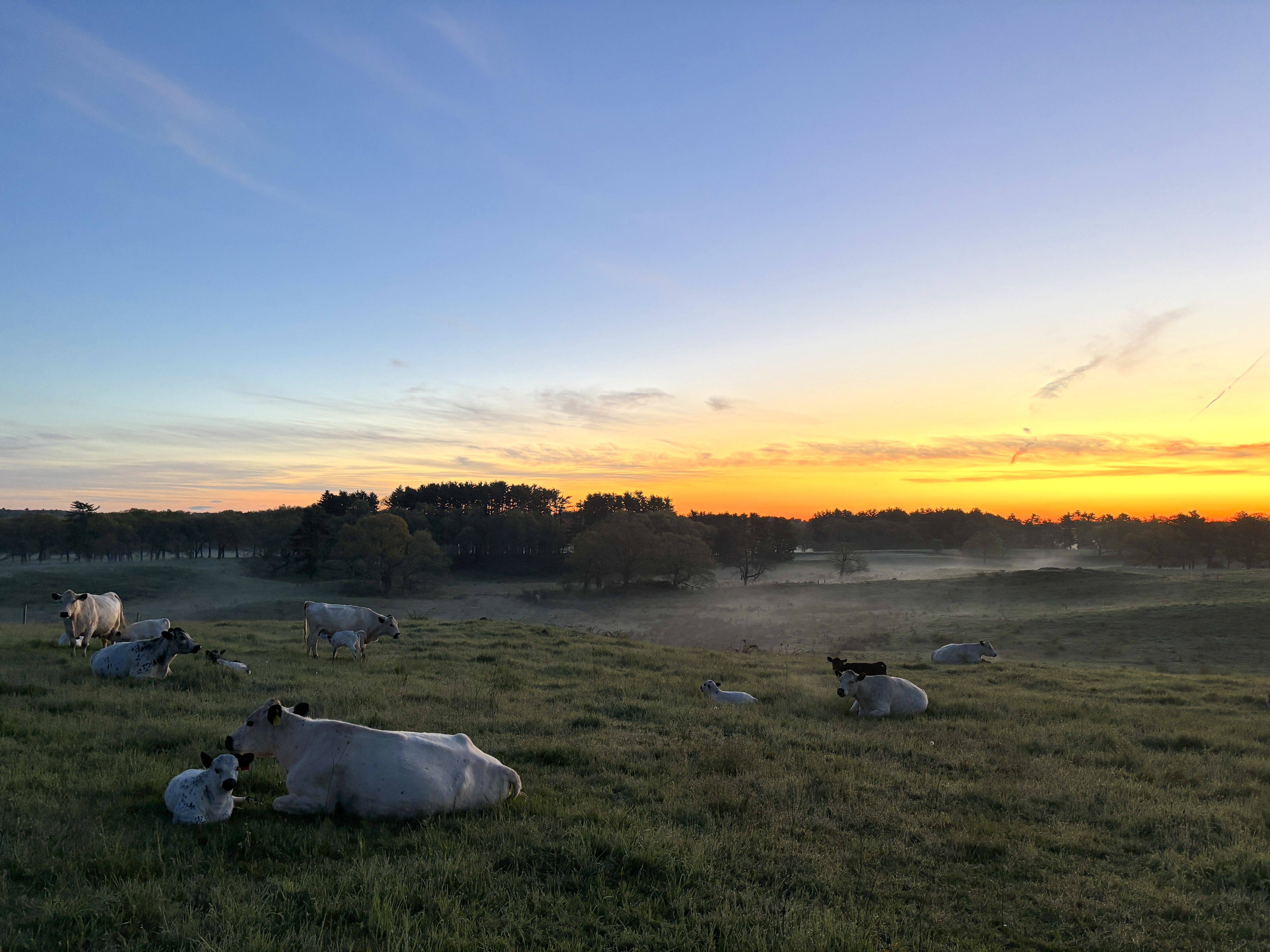
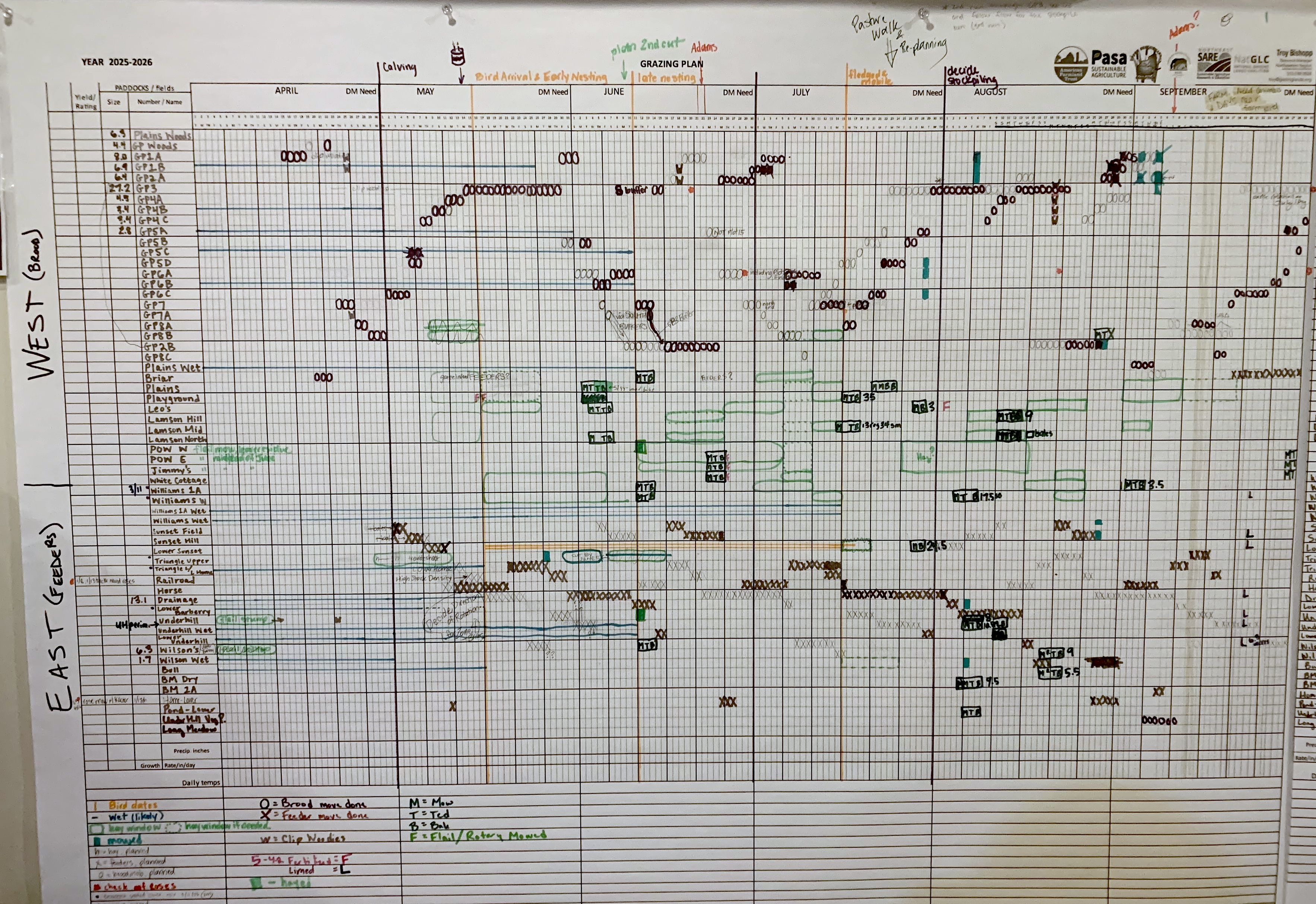
From April through December, 2025 83 cattle (including 12 removed and 23 new calves) grazed across Appleton Farms’ grasslands including both Ecological Landscape Units and production fields. Since 1999, Appleton’s livestock operation has been central to our strategy for maintaining ecological value across over 400 acres of grasslands. For this to work, we support the productive capacity of our fields to feed our livestock through careful stewardship of soil and forage resources. Over the years, we have used different approaches to achieve these goals. Over the last two years, our farm and ecology teams have come together to create an integrated ‘grazing plan’ that takes into account sustainable grass farming principles while providing suitable habitat for the native species that call our farm home. The central tool of this process is a grazing chart, and we made a big one!
As our first year planned using this new approach comes to a close and our second begins, we hope to share some highlights of what Appleton staff were able to achieve over the last year, and what we hope to achieve in the coming year. In 2025…
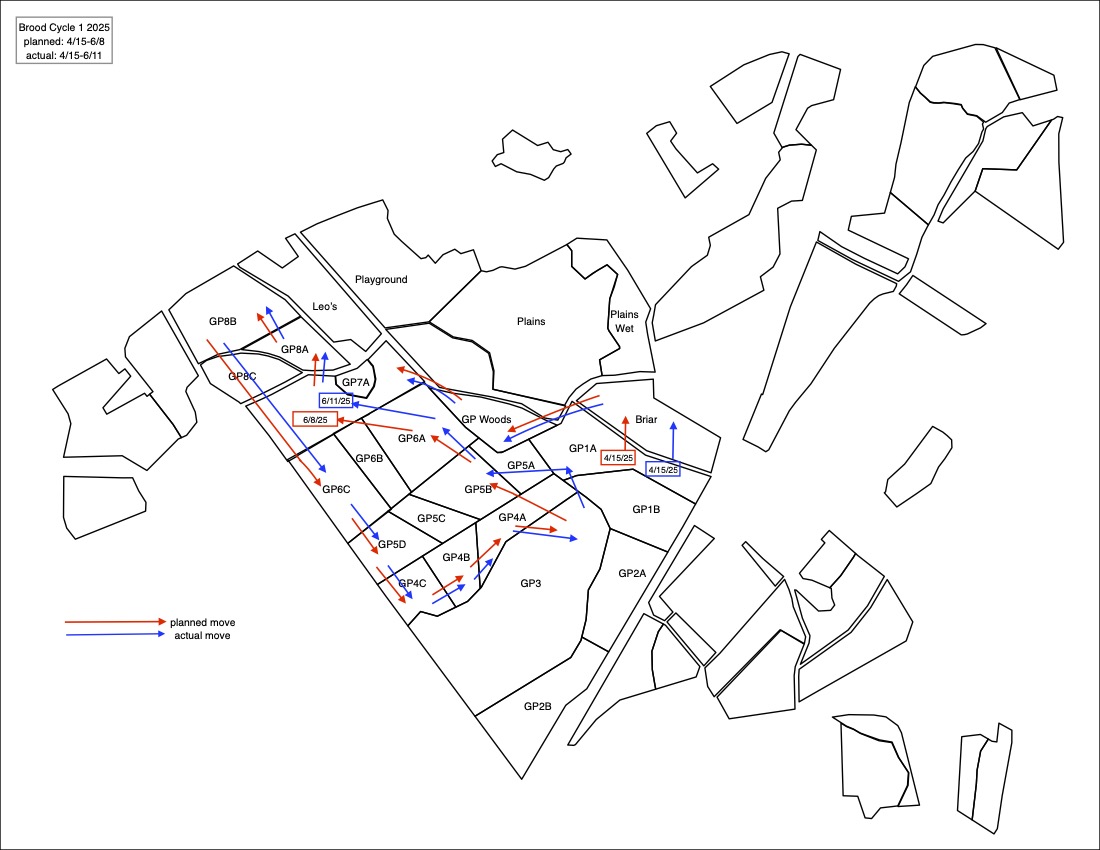
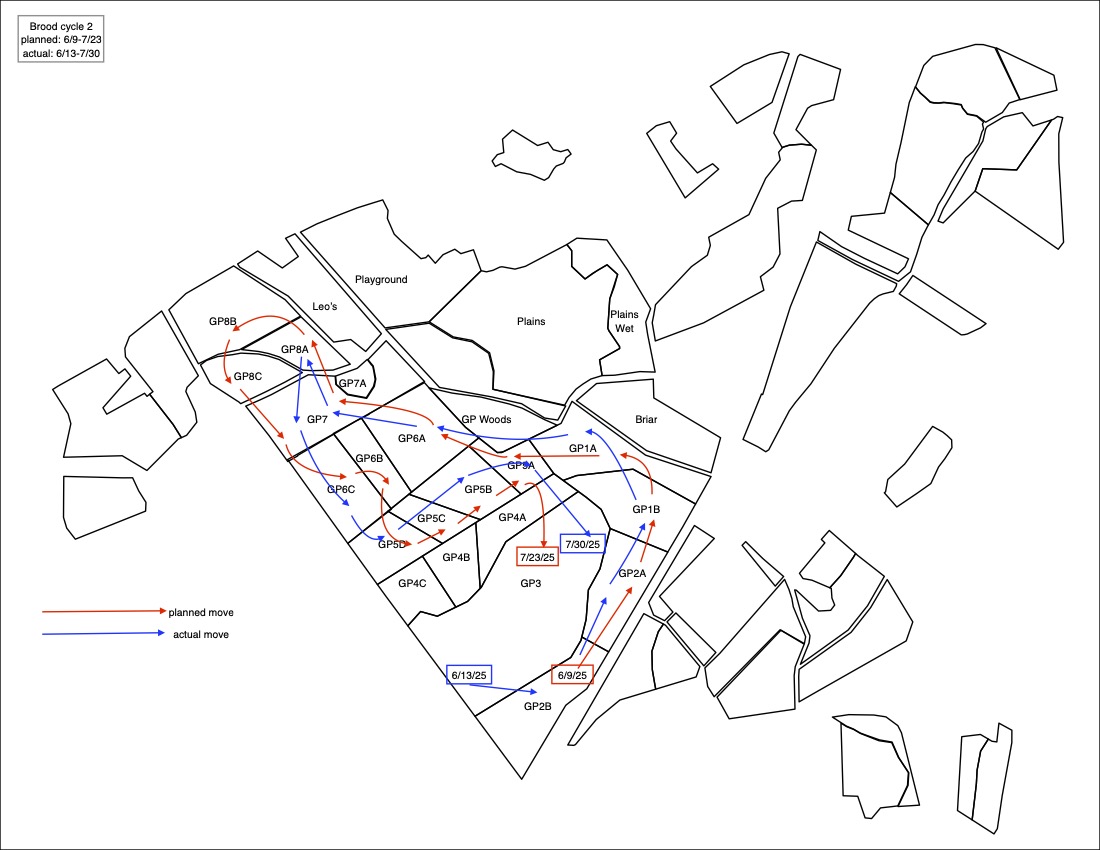
- 259 acres of pasture and hay field were grazed at least once. This represents about 4 acres per animal, within the typical range for 100% grass fed in the northeast. Click through the following maps to see how our herds moved through fields through the seasons. Each of these moves was planned according to rotational grazing principles of appropriate paddock size, utilization, grazing period and rest period given animal demand and forage availability.
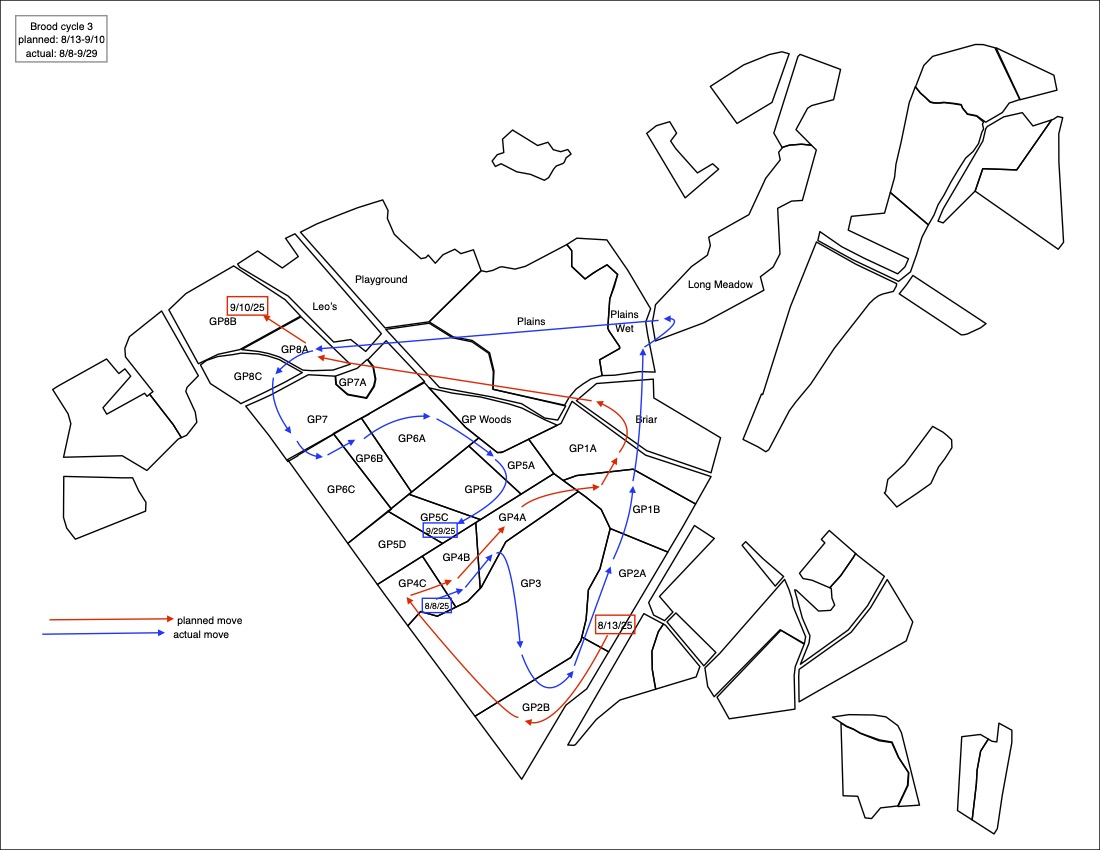
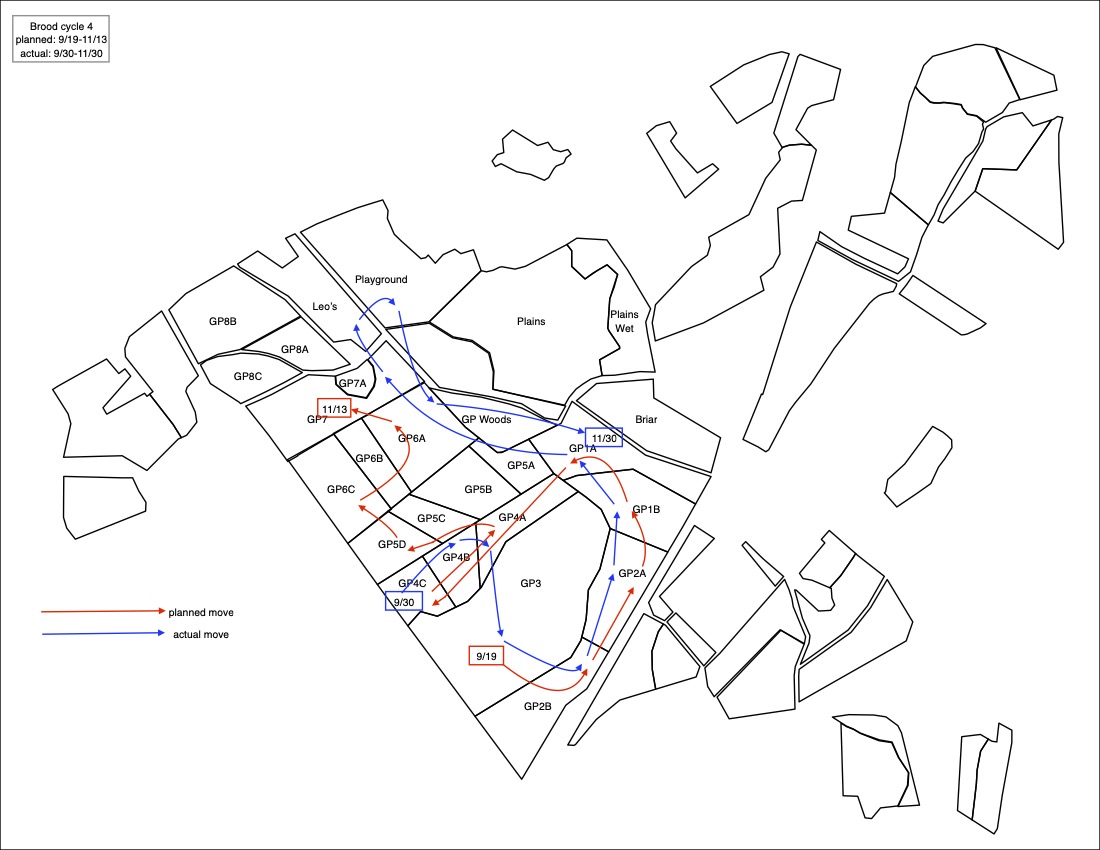
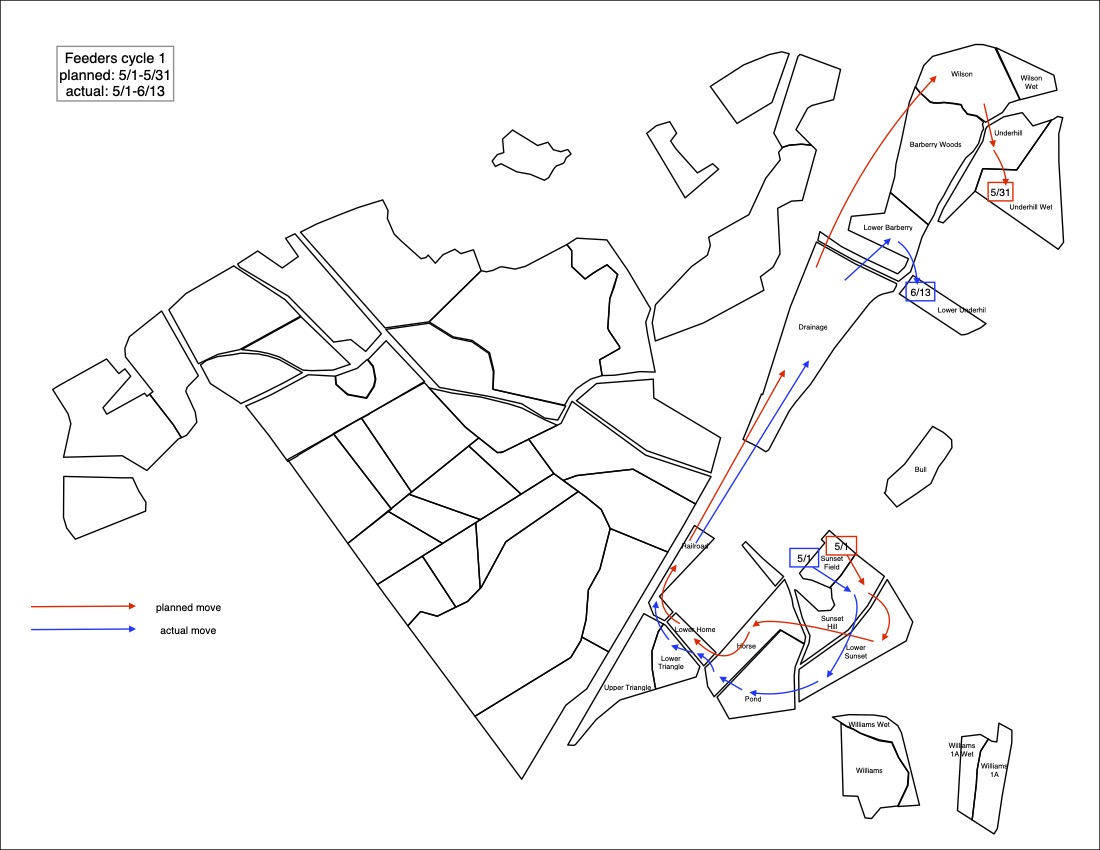
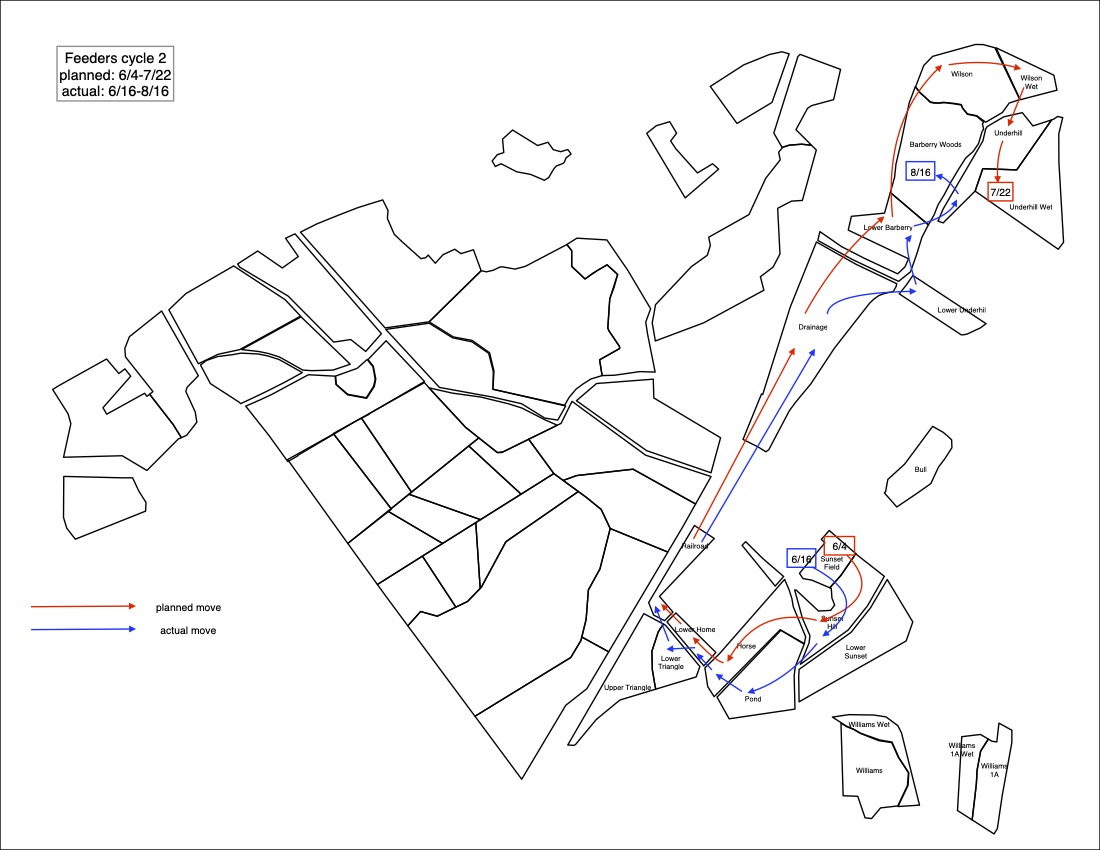
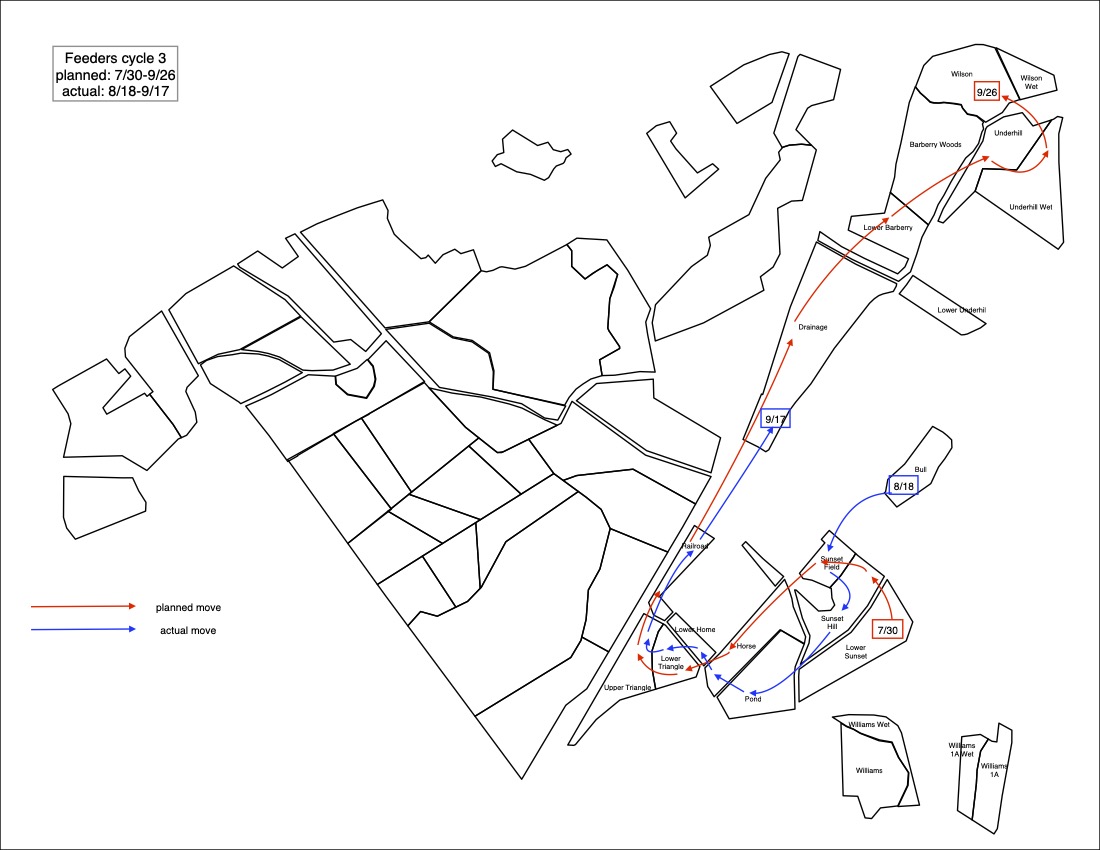
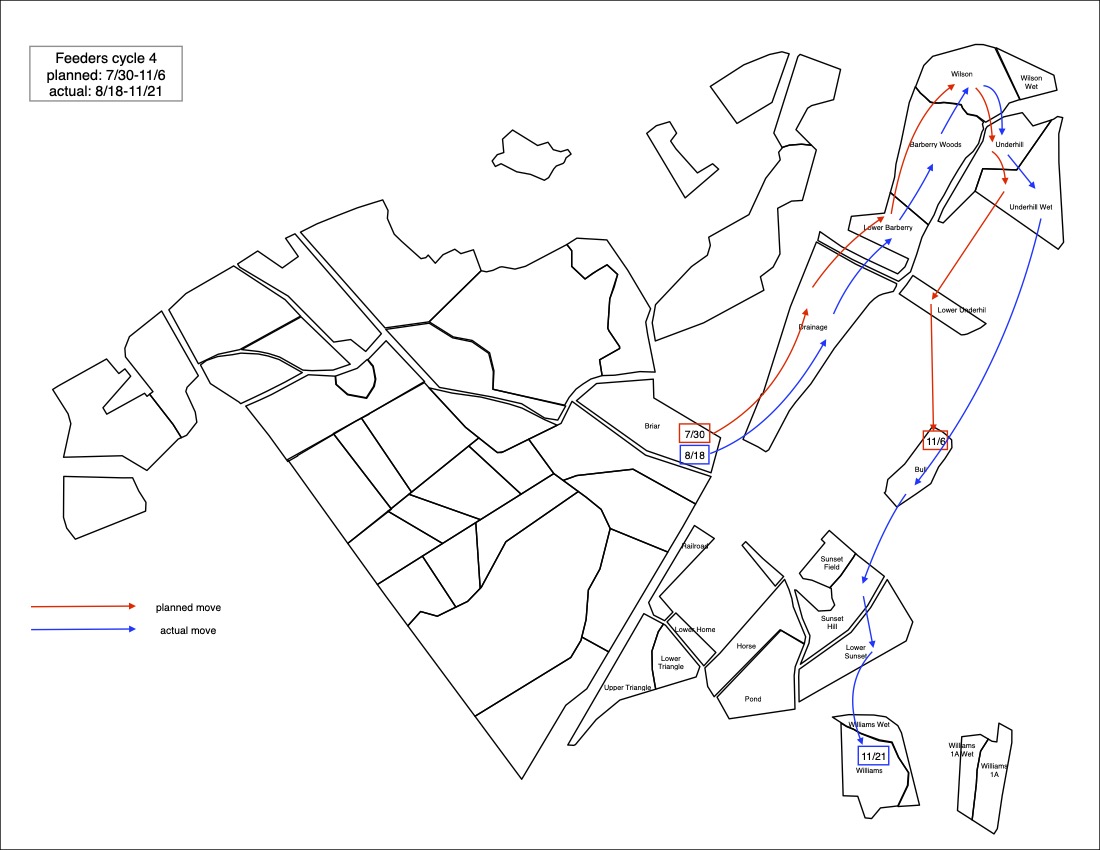
112 acres were also hayed at least once producing 307 round bales (115 tons) of hay, bringing the total land base per head of cattle (including calves) to around four and a half acres.
Between May and November 2025 our 2024 calves saw an average gain of 284 pounds. That’s an average of 47.3 pounds per month! After a fairly hot and dry 2024 (which makes weight gains difficult due to heat stress on the body plus decreased forage quality), we were beyond thrilled that increasing the speed of our grazing rotation resulted in such robust gains over a six month period.
Weaning weights were also up. In 2024 only 30% of that year’s calves were over 400 lb at weaning, while in 2025 100% of calves were over 400 lb (and 45% were over 500) at weaning. These increases in weight gain are another sign that our management approach is working. They hint at improvements in our soil and forage base, as well as how we are utilizing these resources more efficiently. Of course, improved weight gain also underlies enterprise economic efficiency and meat quality.
Soil amendments and seeds were applied to several fields to improve forage quality and production: 17 acres across five field were frost seeded with legumes to increase nitrogen fixation. 40-50 acres across five different fields were fertilized with composted chicken manure. A 22 acre field was drill seeded with a cool season pasture mix. Seven fields were limed to increase pH, making soil nutrients more available.
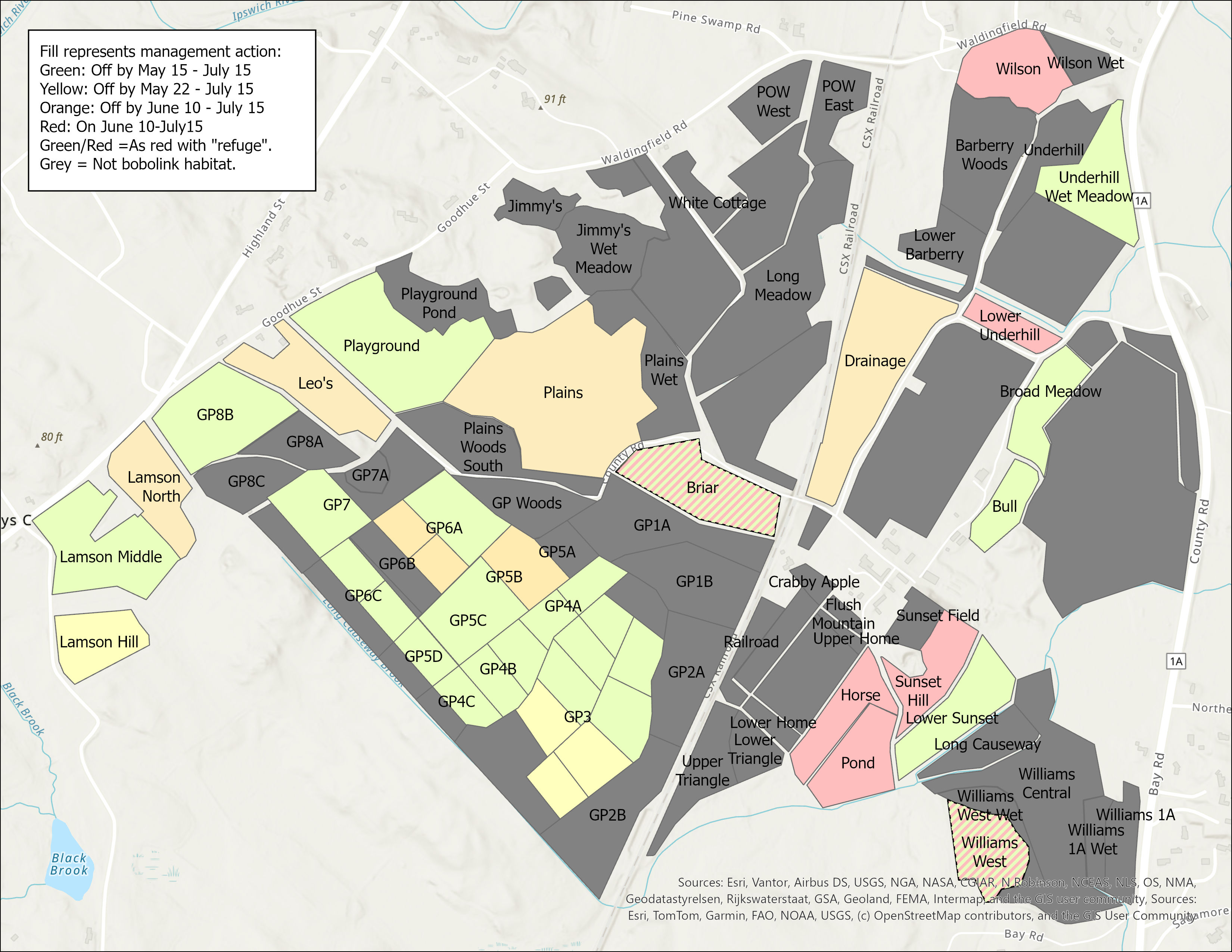
As seen in the following map, about 140 acres were managed as grassland bird nesting habitat. This means that they were not grazed, hayed or mown from mid-May through mid-July. Grassland birds, an indicator of grassland habitat quality are in steep decline both nationally and regionally as habitat loss, invasive species, climate change, and agricultural intensification threaten populations. Both in the context of Trustees and Massachusetts grasslands, Appleton ranks highly in terms of grassland bird habitat.
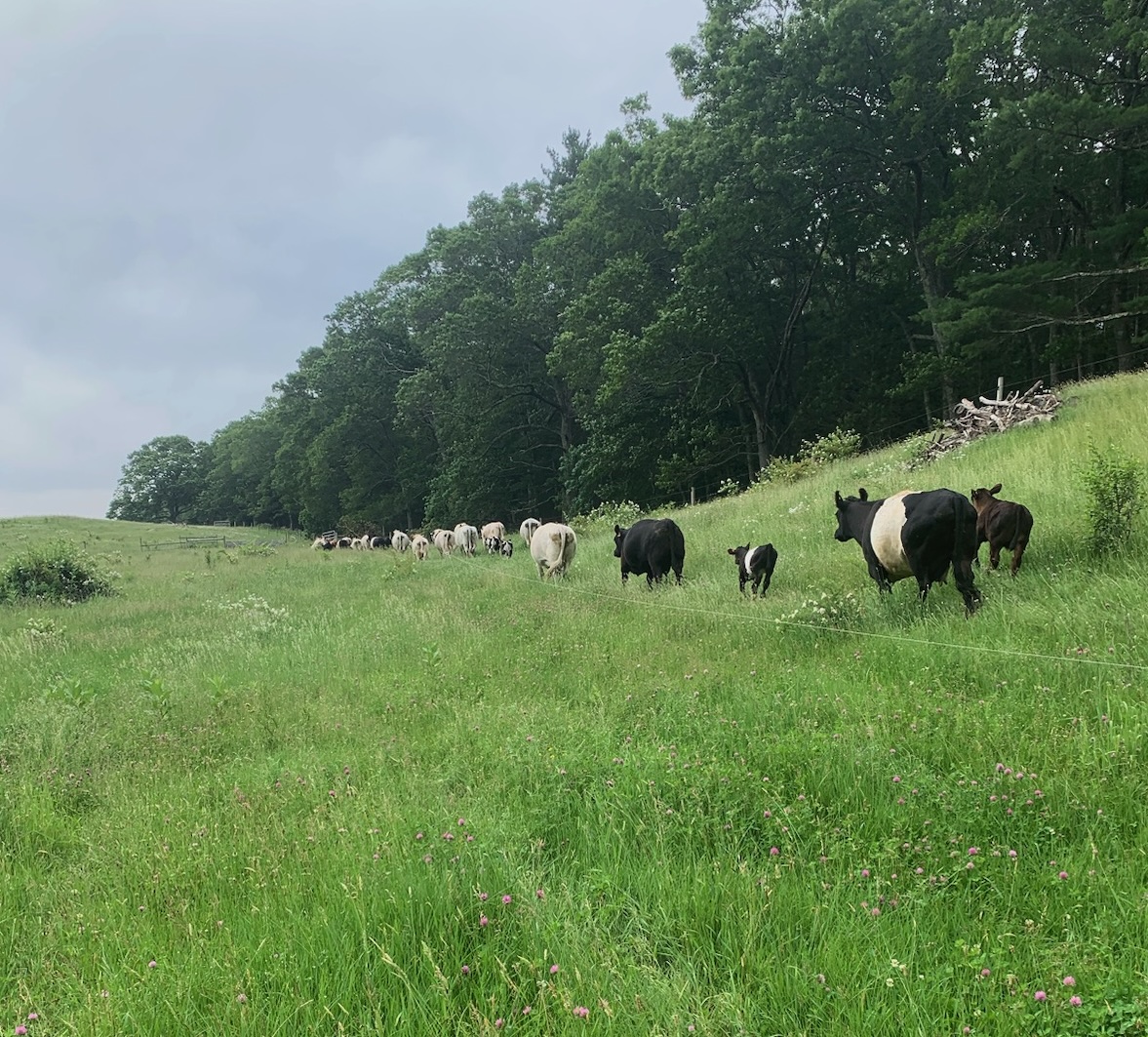
Occasionally, cattle had a long walk along buffers to avoid nesting grassland birds.
A buffer around the Great Pasture. For more information about the status of grassland birds at Trustees properties, including at Appleton, see this report.
We helped manage diverse wet meadows, rare plant species, and insect habitat through carefully timed grazing and mowing that set back community succession while still allowing target species to complete their reproductive cycles.
In collaboration with our stewardship team, campers, and volunteers we impacted over 100 acres of multiflora rose and other woodies in the Great Pasture. Our treatment methods included mechanical clearing with diverse equipment (brush hog, DR mower, brush cutter), manual clipping, spot spraying, and mob grazing after spraying roses with molasses to encourage browsing.
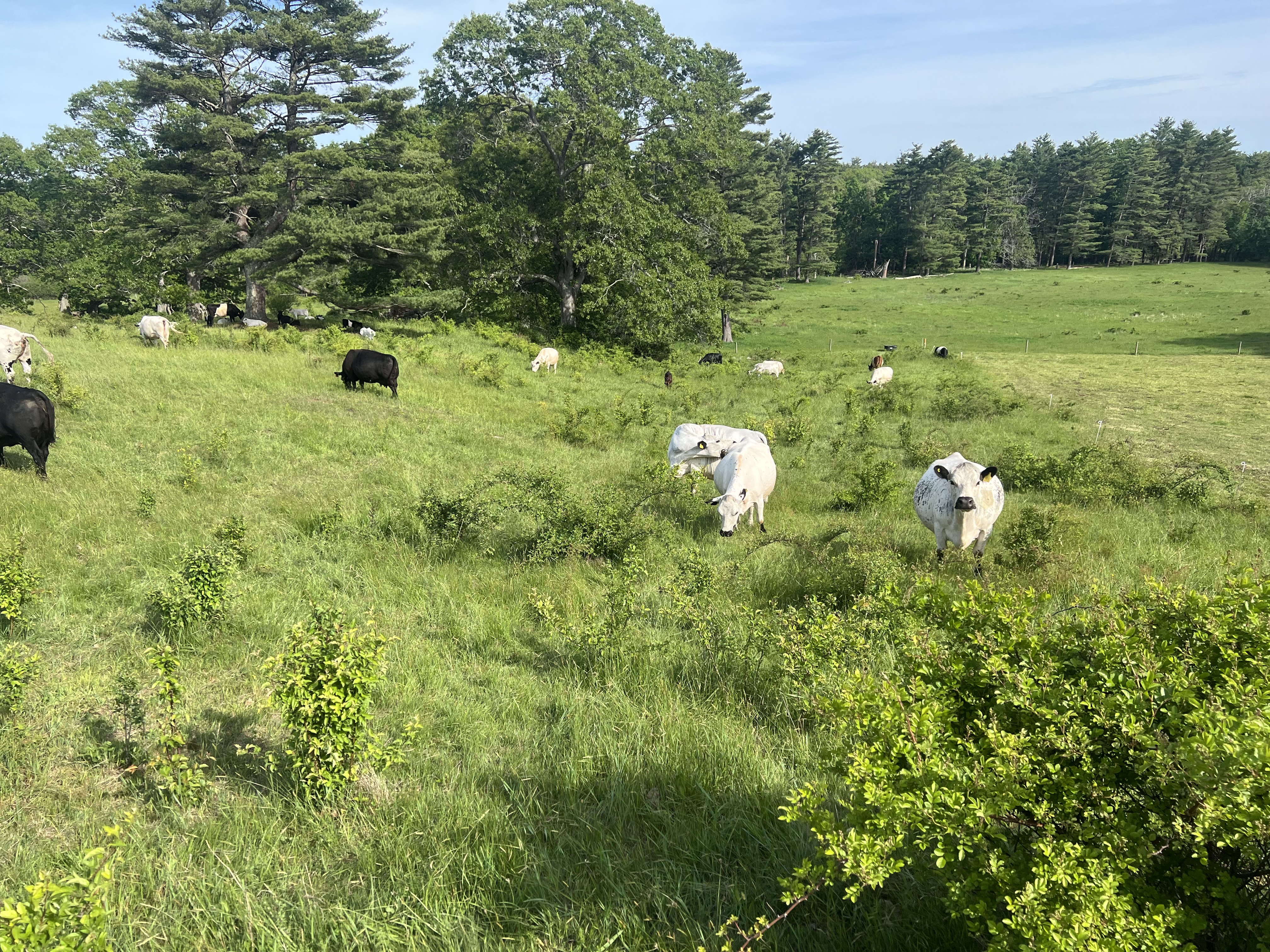
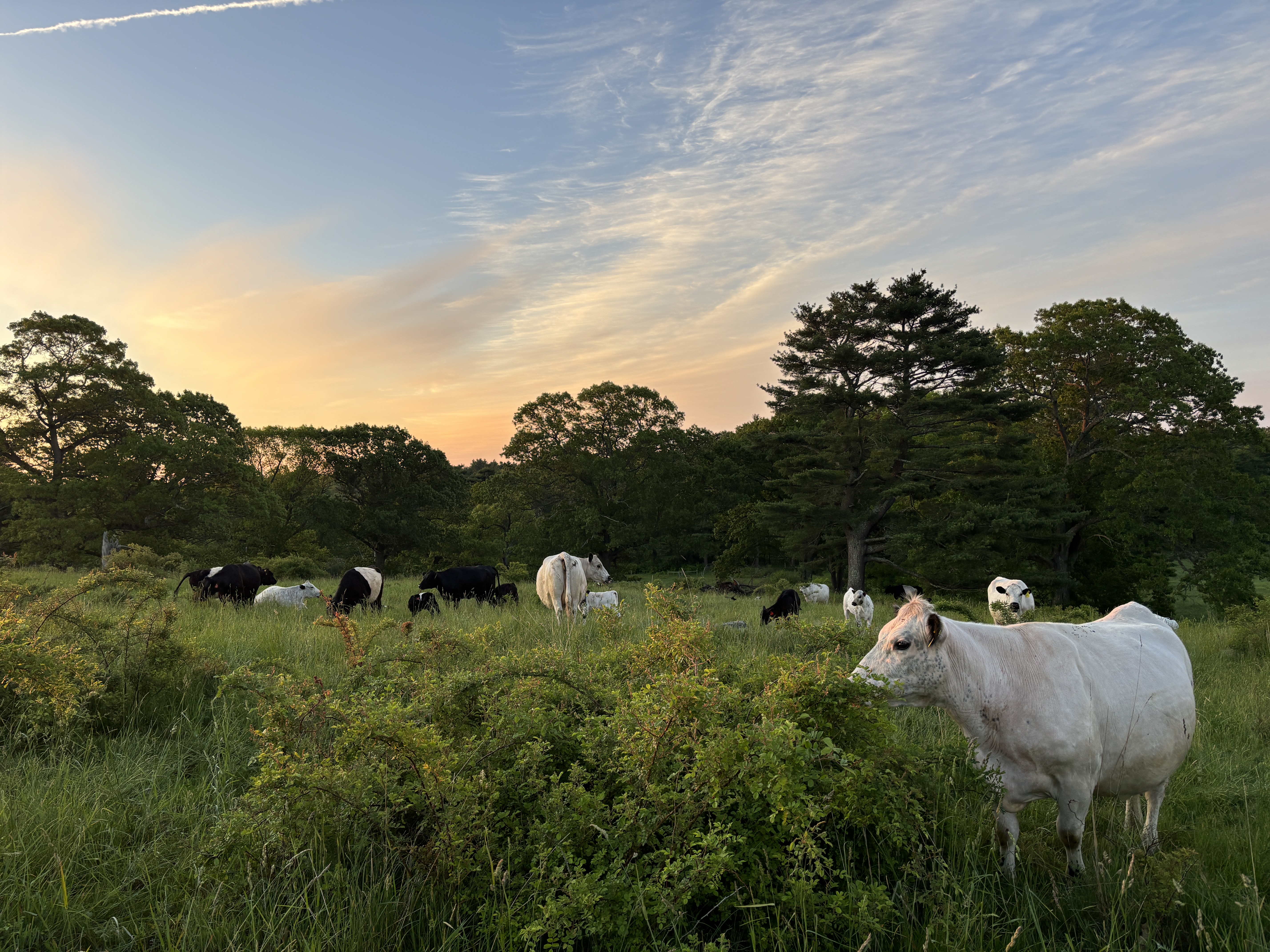

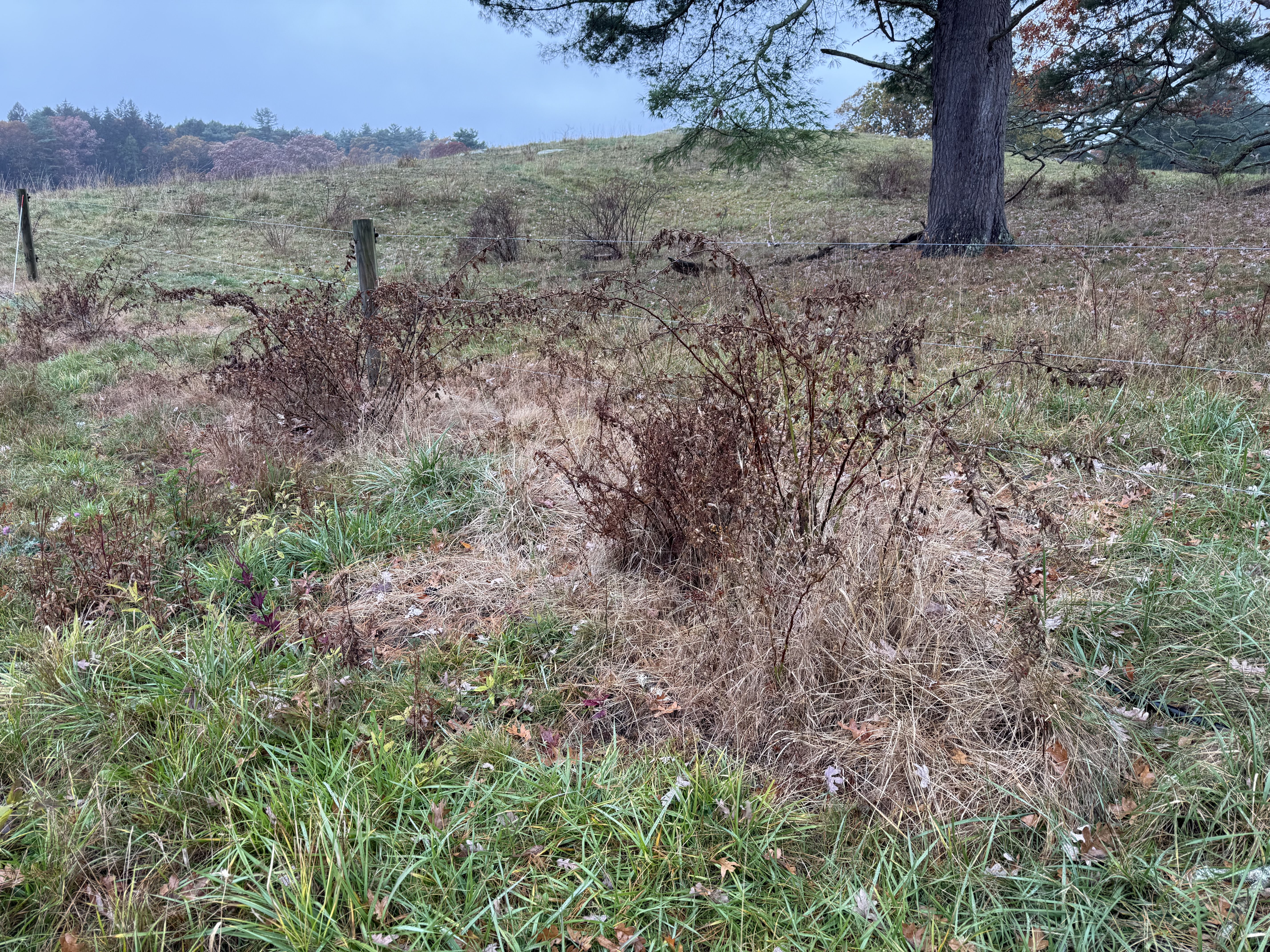
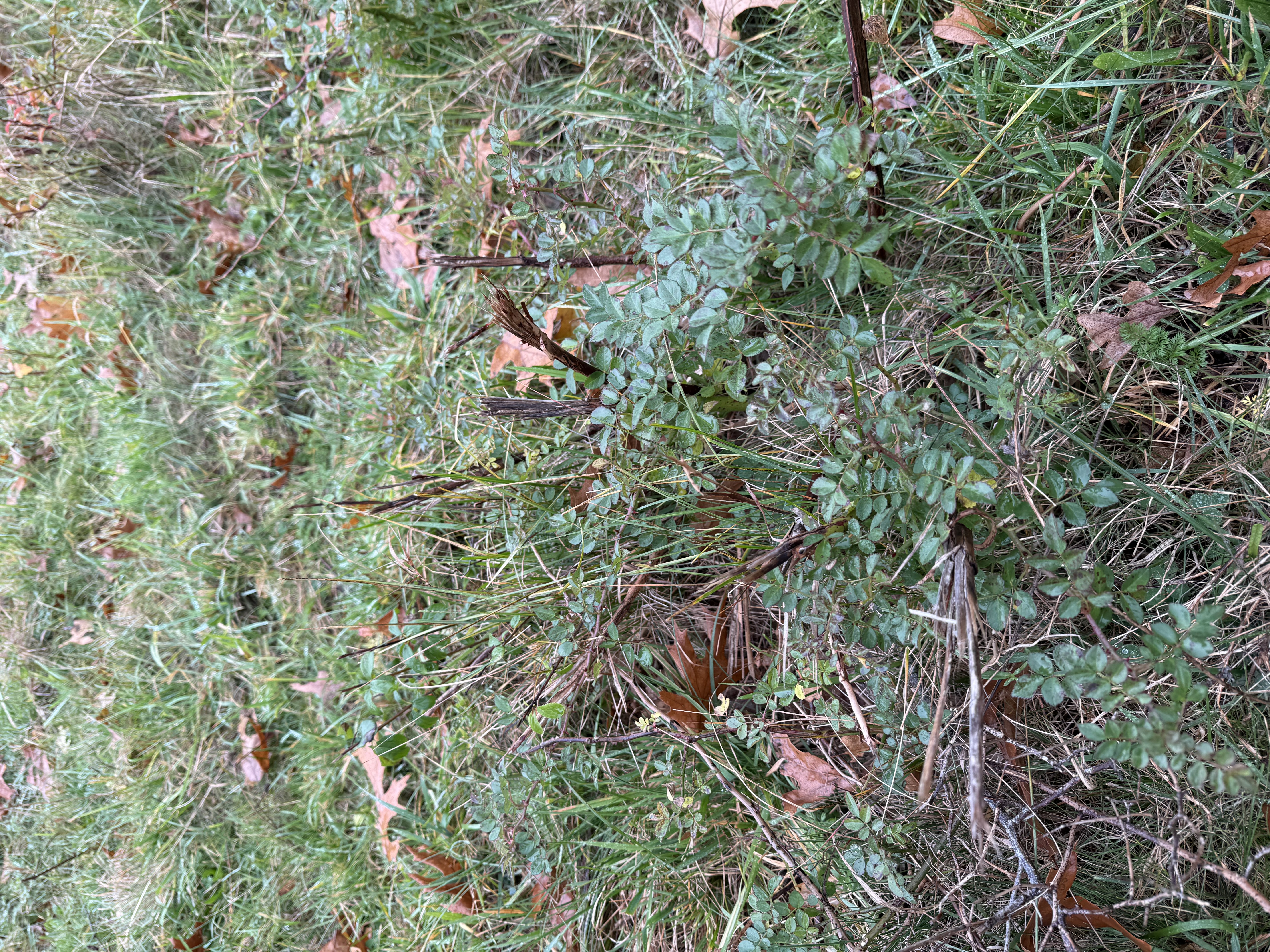
Multiflora rose gallery.
Looking Forward to Spring
Soon, our cows will be back out on the landscape. This year, we’re expecting a slightly larger herd size of 94 total head. Of these, 20 will go to harvest, helping us reach a stable herd size over the coming years. Once again, we are hard at work creating a plan that balances and synergizes production and ecological goals. Our 2026 grazing plan has been charted:
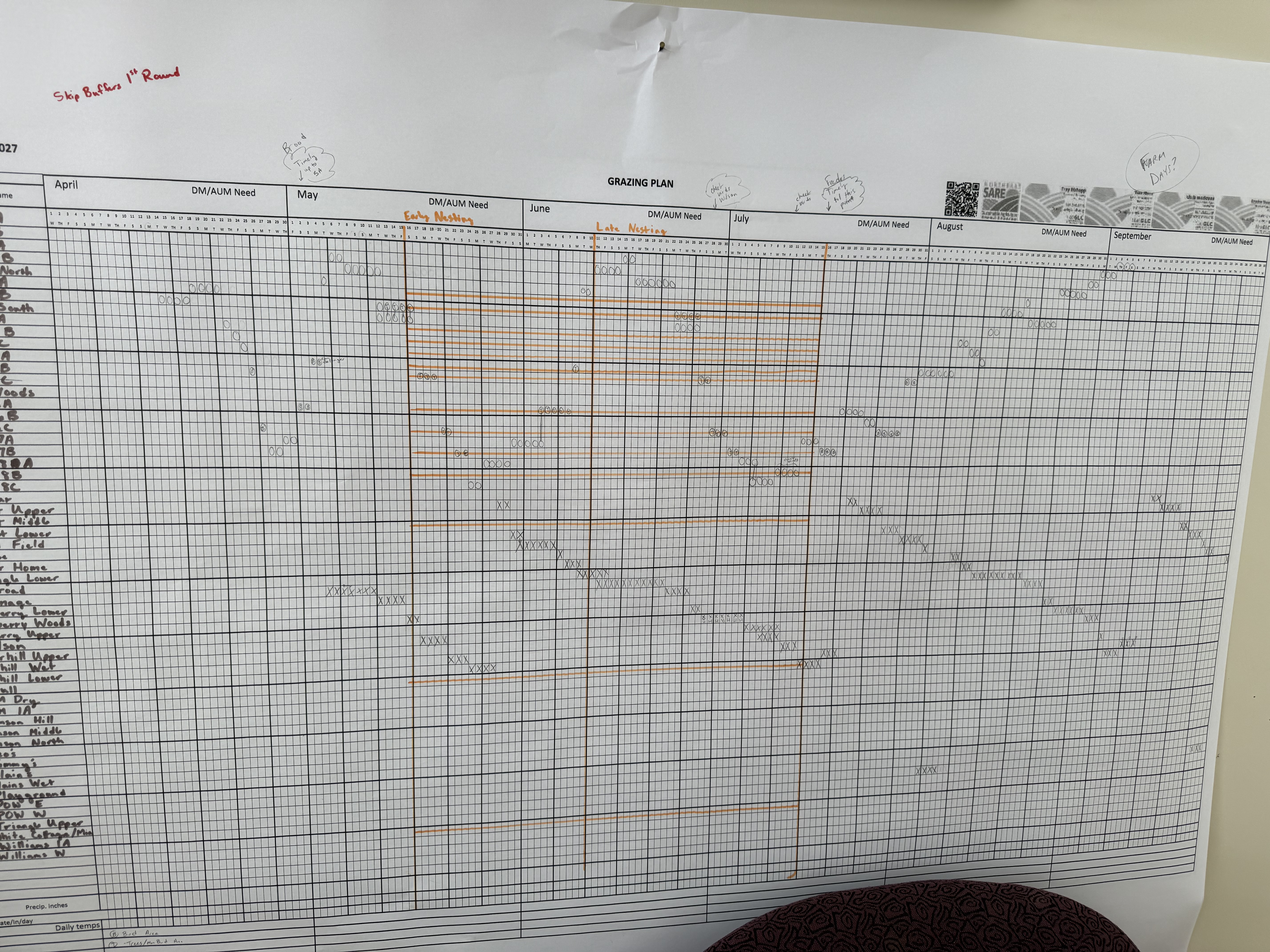
With the experience of 2025 to build on we have been able to move more efficiently through our planning process, as animal demands, available acreage, and general harvest patterns remain similar. This consistency can be seen in our new set of flow maps, now with the addition of grey ‘exclusion’ areas for ecological or other reasons:
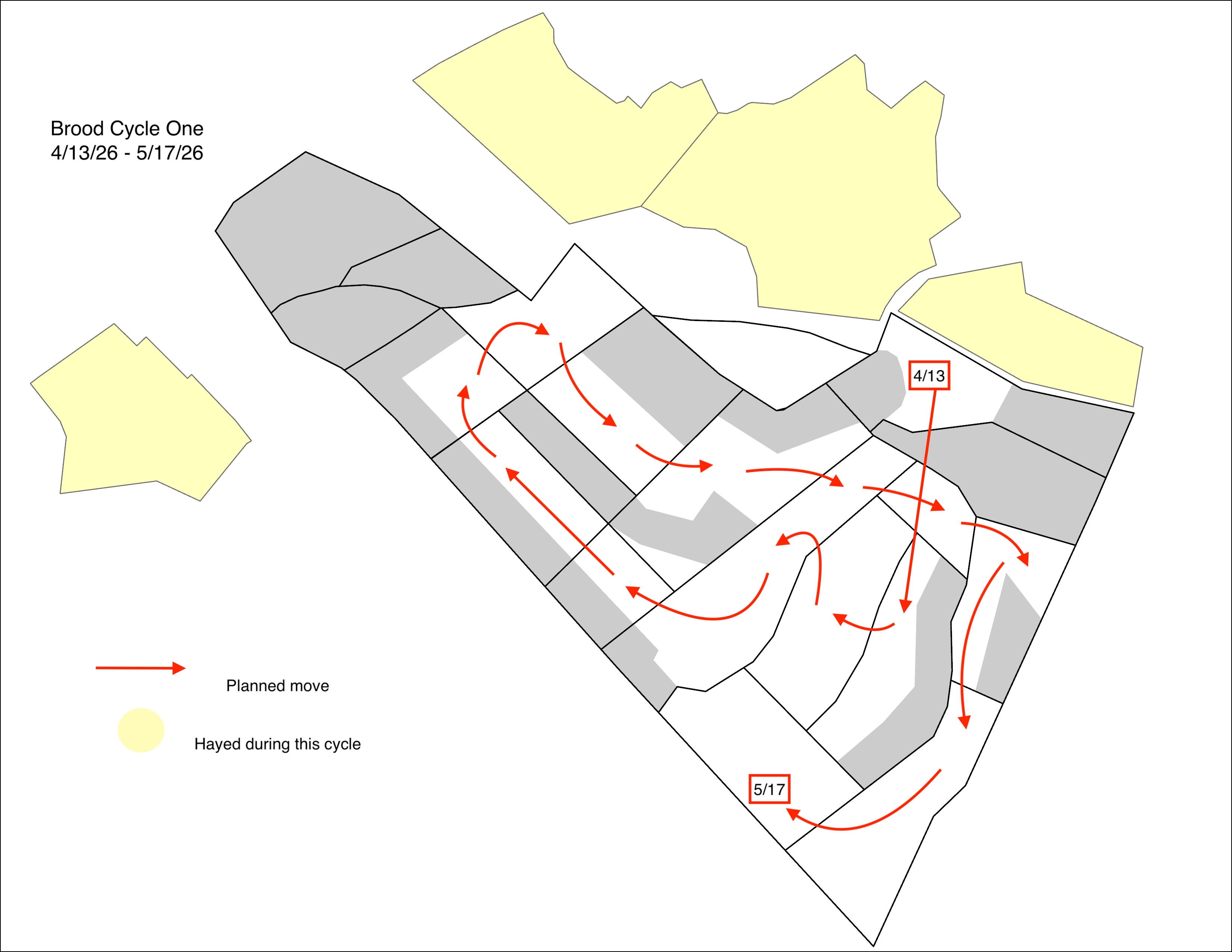
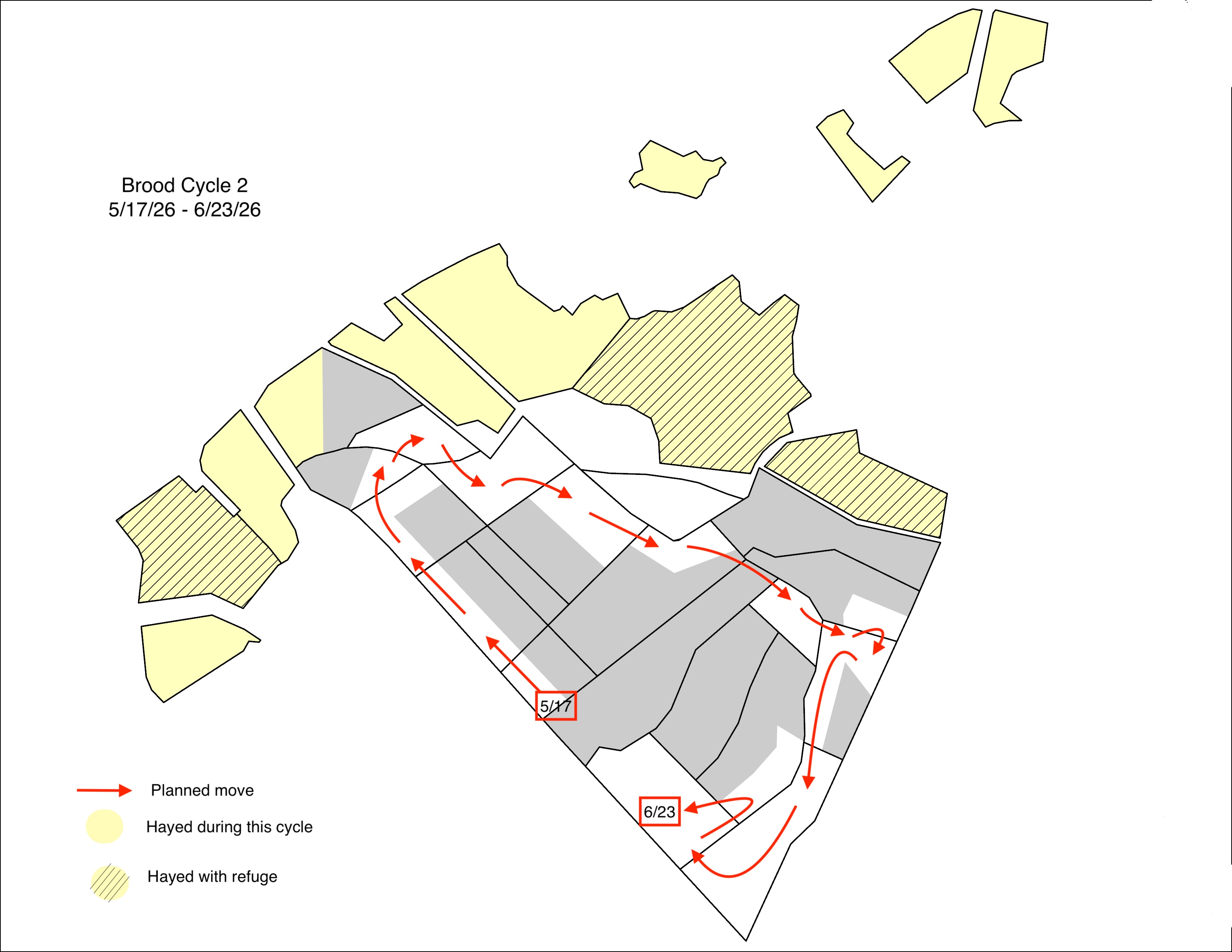
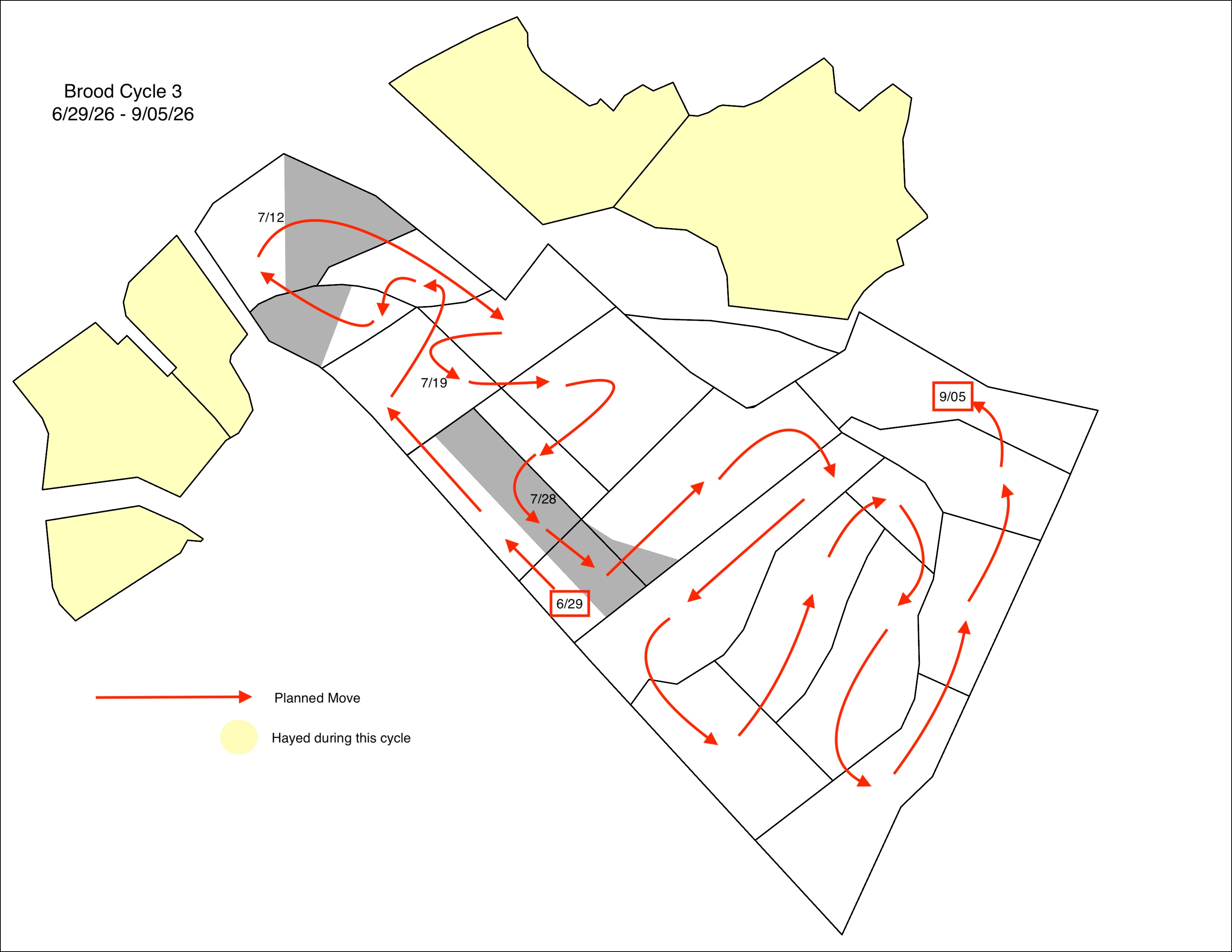
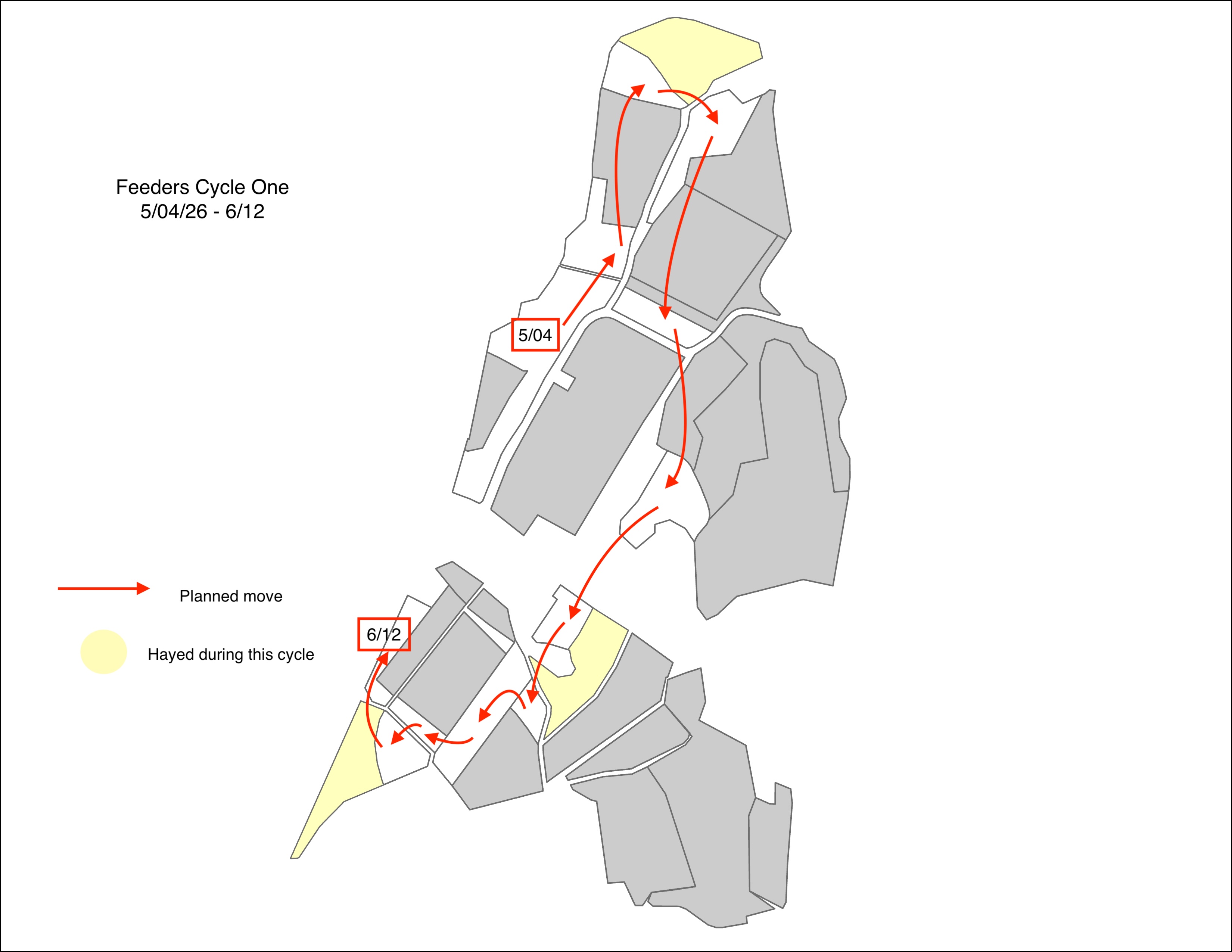
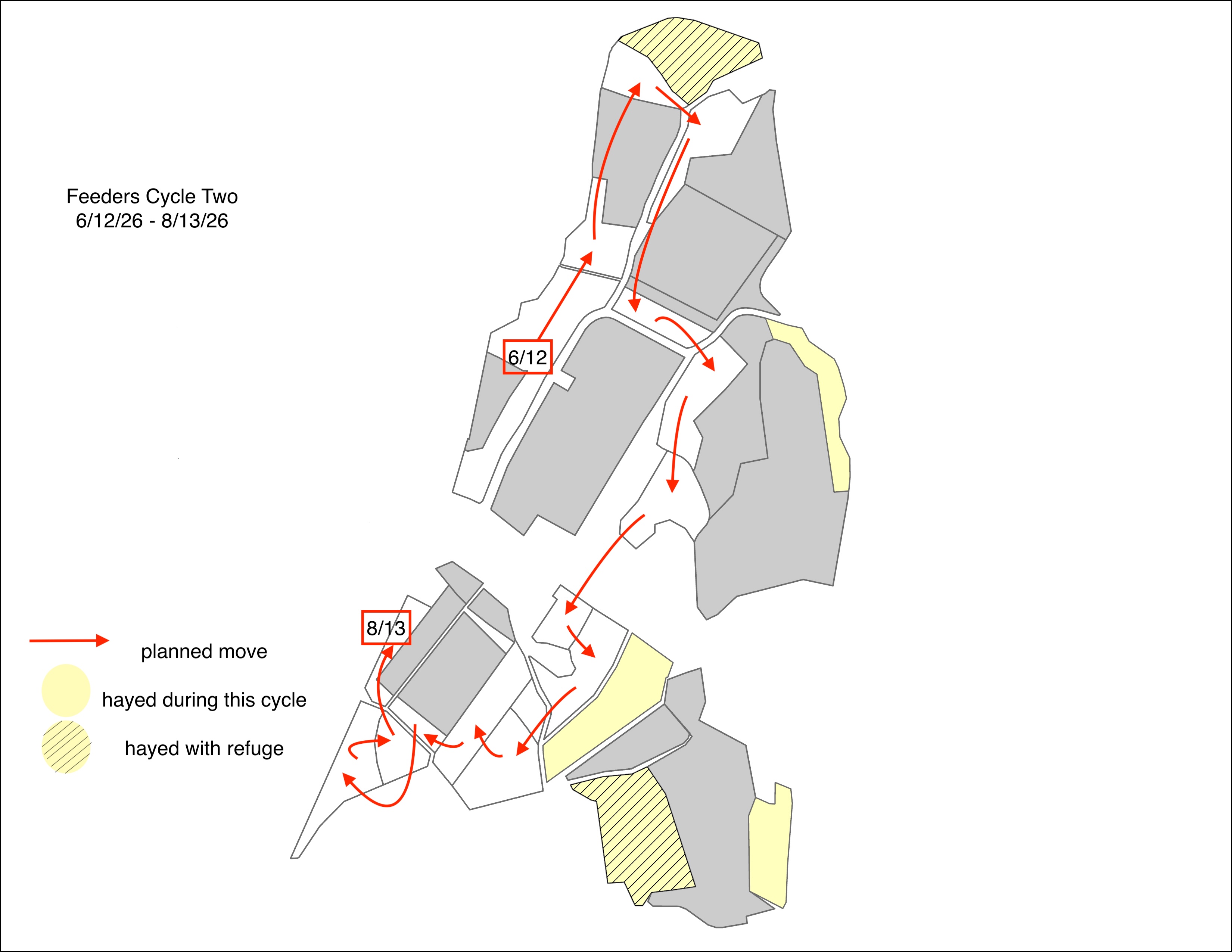
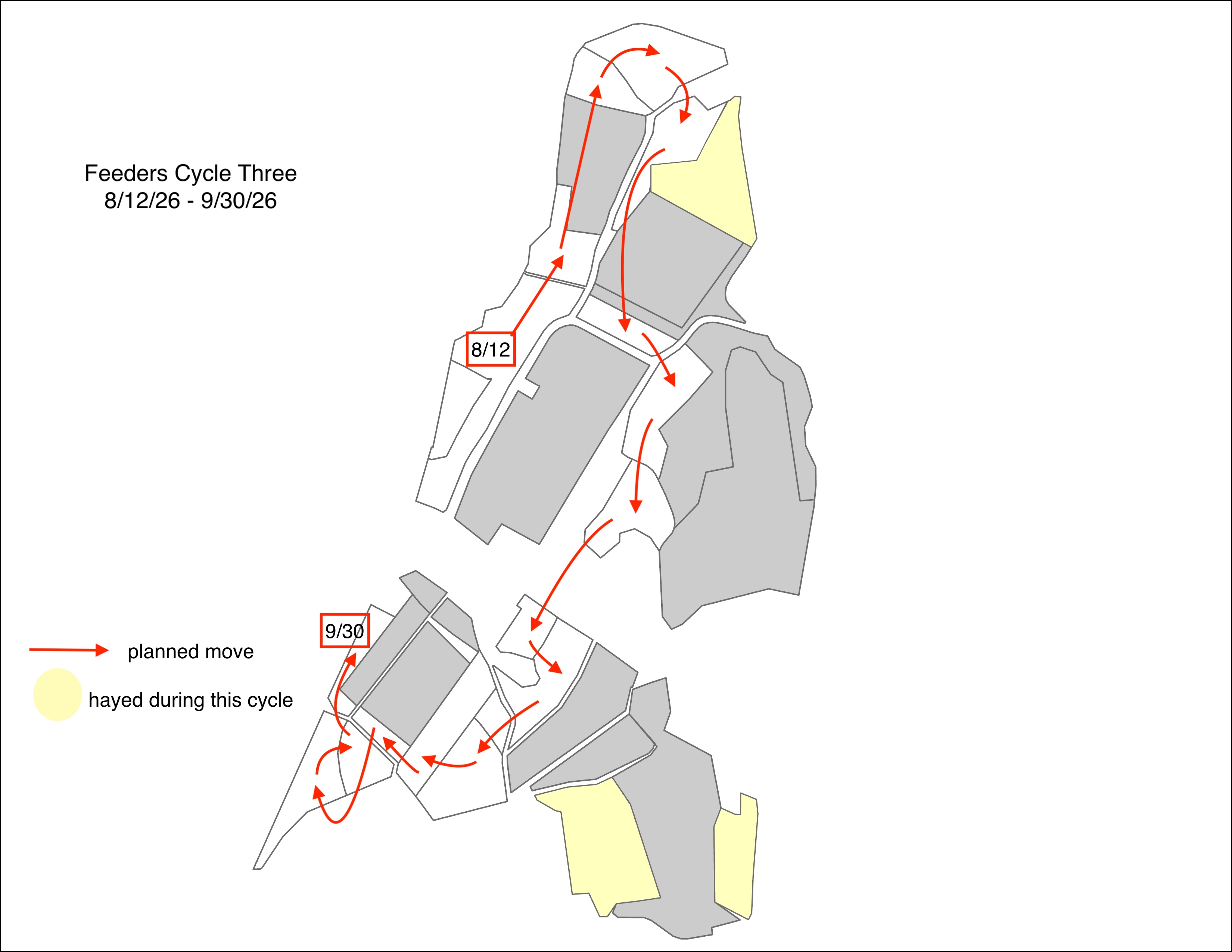

Like our flow maps, we have made tweaks in other areas, including rating fields based on their past forage production, digitizing our grazing chart on a shared app (Maia Grazing), updating monitoring and recordkeeping methods, planning for a broad suite of field amendments (lime, macronutrients, minerals, organic matter), and seeding to improve forage composition. Already, in late winter we frost-seeded legumes to into several fields that our vegetation assessments identified as deficient. We plan to continue expanding our grazing of hay fields, especially as fall stockpile, to recycle nutrients and reduce compaction.
A focus for the 2026 season will be improving finishing. To do this we are accelerating the grazing rotations for our feeder mob to encourage higher forage intake. More frequent moves with higher stocking density should train the mob to graze with a little more urgency, resulting in them eating more forage and gaining weight quicker. Daily moves will also help ensure they are not taking a ‘second bite’ off forages, encouraging fast, nutritious, and robust regrowth. Faster moves mean a faster return to a paddock, so we can graze forages before they start to mature and lose energy. Getting enough high-energy feed at finishing to develop marbling is one of the biggest challenges for a grass-fed beef operation, and we expect this will be a step forward for our meat quality.
We have also used data from recent years better understand how native species are distributed across our fields. In addition to rare species and grassland bird nesting areas, which have been refined through our grazing study and volunteer efforts described above, we are expanding our planning efforts to incorporate more diverse indicators of ecological value.
Specifically, in 2026 we are focusing on butterflies as an indicator for grassland invertebrate habitat quality. As the foundation of animal food webs, insects play an incredibly important role in ecological communities. Like grassland birds, butterflies are charismatic, relatively easy to identify, and in decline. Their presence depends on long-term provision of mixed resources including host plants, nectar sources, and overwintering habitat.
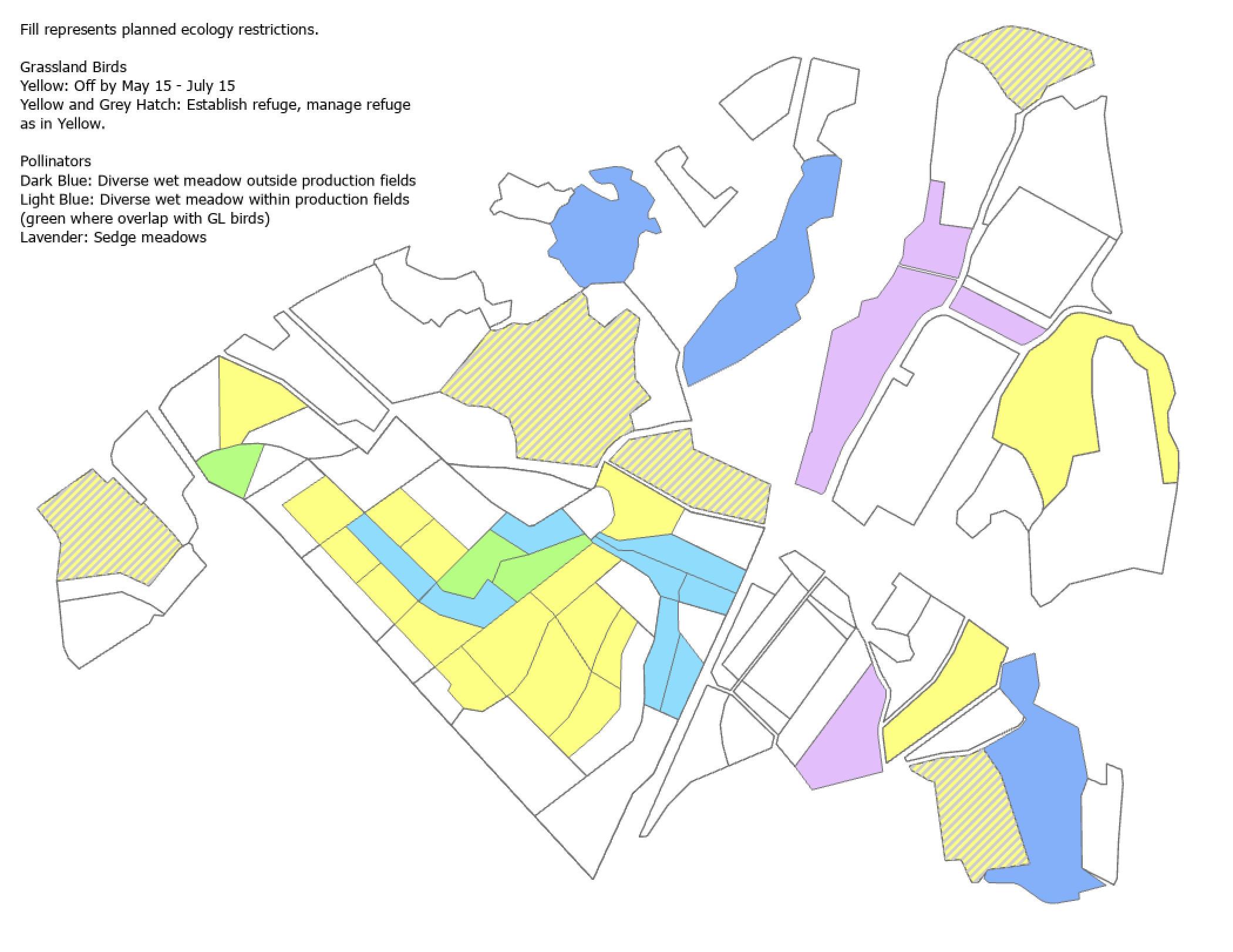
There are several butterfly hotspots across Appleton Farms, which we have organized by level of plant diversity, composition (the presence of key host plants), and how these areas have typically related to the livestock operation (an important driver of plant diversity and composition). Our working descriptions of these areas fall into three categories, with relevant management guidelines:
Diverse wet meadows outside of production fields. These fields have high wildflower diversity, often including host plants for rare butterflies. They need disturbance to remain grasslands, but not every year and ideally during the dormant season. We do not plan for production activity in these fields, but occasionally they may be grazed during extreme drought during the fall.
Diverse wet meadows within production fields. These fields also have high wildflower diversity, but with a distinct composition due to the fact that they have been typically grazed at least once per year. We plan to continue grazing these fields in-season, but with a keen eye towards not overgrazing, allowing extended rest periods, and waiting until after June, a critical management window for butterflies.
Sedge meadows. These fields, also typically within production areas, do not necessarily have high wildflower diversity. Instead, they have a large component of sedges, an important host plant for several species of butterflies. These fields are typically grazed more frequently than the others, and since sedges are less palatable, they tend to proliferate. While we will continue to graze these fields in season, we plan to exclude livestock from sedge meadows through June. With exception for extreme woody/invasive pressure, we will not mow any of our pollinator hotspots during the growing season.
Finally, we are continuing to develop our approach to managing woody invasives in our pastures, with the Great Pasture as our primary concern and laboratory. Both grassland habitat value and forage production depend on effective control of shrubs like multiflora rose. While spot spraying with herbicides can be effective, and is a indispensable tool across Trustees grasslands, the presence of livestock at Appleton provides an opportunity and incentive to explore alternatives.
In 2025 we learned a lot about the efficiency and effectiveness of different types of equipment for mechanical control across variable field conditions as we did our best to set back woodies across the vast majority of the 100+ acre pasture. We have identified constraints to mechanical control (crowded field edges and below fallen trees), and other challenging areas (too steep, rocky, or wooded) where support from our stewardship team and habitat specialists are needed. Elsewhere, we have laid out an ambitious plan to mow any woody vegetation within 1-2 days following each grazing cycle. We are hopeful this approach will be successful based on the lack of woody invasives in our regularly mown hayfields. Because these efforts are constrained by our other priorities, the following map was developed to help coordinate this work.
Thank you to all who made our planning season a success: Alyssa Hajek-Jones, Andrew Lawson, JJ Desmond, Ellie Harbeck, Robert Oppenheimer, Julie Richburg, Jane Hammer, and Saskia Campbell.